

Amandeep Singh Gill
UN Secretary-General’s Envoy on Technology

Reimagining the State in the Age of AI
If Britain were designing the state today, with AI available from the outset, what would it build differently?
Better public services will take more than adding AI to existing systems. They will take choices about what Britain builds, how government buys it and which ambitions deserve a national effort.
Those choices are now at the top of the national agenda. The task for those running public services is to turn sovereign ambition into systems the public can trust.

The Autumn Budget put sovereignty at the centre of the UK’s AI strategy, with an AI package of over £700 million that includes extra funding for the Sovereign AI Fund and an AI Challenge Prize to find new uses of AI in public services. This builds on the work of the first-of-its-kind Sovereign AI Unit.
Internationally, the Prime Minister has said AI will sit at the heart of the UK’s 2027 G20 presidency, which culminates in a leaders’ summit in Manchester.
For many citizens, AI will become part of everyday life through public services. People claiming a benefit, seeing a doctor or dealing with their council will meet it without choosing an AI product themselves. As employer, buyer and provider of essential services, the state will set many of the terms on which AI is accepted across society. Its purchasing, investment and regulation will also help decide which technologies mature and which British firms grow to international scale.
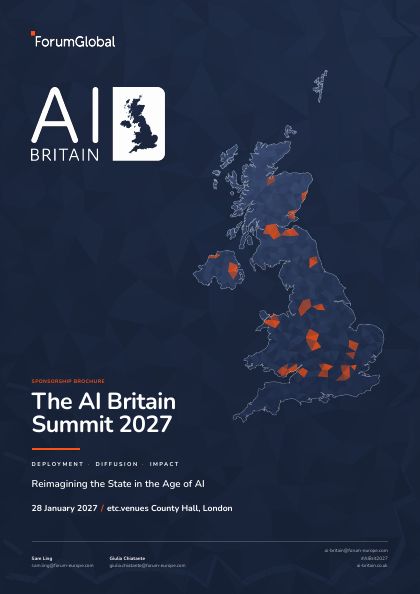
On 28 January 2027 in London, the AI Britain Summit will bring government and public services from across the UK’s nations and regions together with industry, investors, research and civil society to work through those choices. Looking to 2030, it asks which services Britain could redesign, which national projects are worth attempting, and what changes in funding, authority and accountability would make that transformation work.
UN Secretary-General’s Envoy on Technology
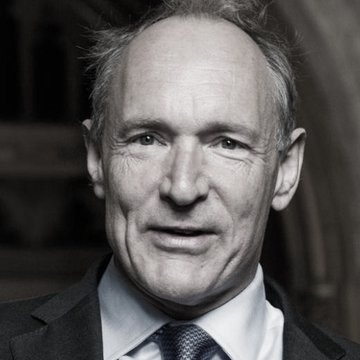
Inventor of the World Wide Web

Director, UK AI Safety Institute

Minister of State of the United Kingdom for Europe and North America
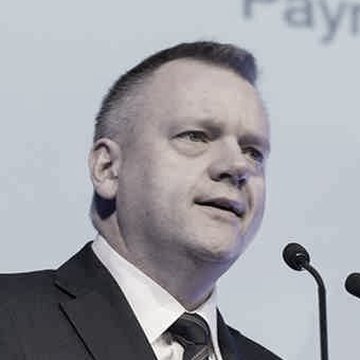
UK Paymaster General and Minister for the Cabinet Office

UK Secretary of State for Foreign, Commonwealth and Development Affairs

President of the European Commission

President of the European Parliament

Executive Vice-President for Tech Sovereignty, Security and Democracy, European Commission

European Commissioner for Trade and Economic Security

Executive Vice-President, European Commission

Executive Vice-President and Commissioner for Trade, European Commission

European Commissioner for Internal Market

European Commissioner for Justice, Consumers and Gender Equality

US Secretary of State

US Secretary of Commerce

United States Trade Representative

CEO, Apple

Senior Vice President, Global Affairs, Google

Deputy Secretary-General, OECD

Minister of State for Digital Transformation, Ireland

Director, US AI Safety Institute

VP and Deputy General Counsel, Corporate, External and Legal Affairs, Microsoft EMEA

Generative AI Lead Europe, Accenture

Vice-Chair of the AI Caucus, US House of Representatives

Former US Ambassador to the OECD

VP and Head of Global AI Accelerator, Ericsson

Associate Deputy Minister, Innovation, Science and Economic Development Canada
*Job title and organisation at time of contribution.
Services that use information government already holds to reach people earlier.
What Britain must control across compute, cloud, models and energy, where it should partner, and how public services retain the ability to change provider, technology or approach.
How public demand, investment and procurement can help British AI firms grow from a first public contract to international scale.
Consent, correction and appeal, professional judgement and the authority to stop: the terms on which AI earns public confidence in health, justice and essential services.
The ambitions that merit sustained national commitment over a decade, and five moonshots pitched to delegates for the AI Britain Moonshot Award 2027.
How the gains from AI are measured and shared across the UK’s nations and regions, and the expertise public bodies need to commission, deploy and govern AI effectively.
What moonshot could transform Britain’s public sector? Entries are open for the AI Britain Moonshot Award 2027. Five will be selected and pitched to the summit on 28 January, and delegates will choose the winner.
Your reference is . Forum Global will reply to every entrant by Friday 11 December 2026.
Senior participants, by invitation and registration, drawn from across the UK and its international partners.
Thursday 28 January 2027, etc.venues County Hall, London. Times are UK time.
The Prime Minister’s AI Taskforce was established in July 2026 to transform public services with AI and to drive growth and adoption across the country. Its remit brings public-service reform and economic growth together at the centre of government.
In 2027 Britain also holds the presidency of the G20. The Prime Minister has said he will put AI at the heart of it, and that Britain will work towards a single set of global principles and standards for the technology.
Where could concentrated national effort achieve a change that individual departments or public bodies cannot deliver alone? This keynote considers the choice of priorities, the investment and authority needed to pursue them, and how national ambitions should reflect the responsibilities of devolved governments, cities and regions. It will examine how progress can be assessed through service outcomes, costs and the public’s experience, and what the priorities Britain sets at home mean for the agenda it brings to the G20.
What changes when government develops common AI capabilities that many agencies can use? Singapore’s government provides a concrete example of shared platforms and tools, including its Pair assistant for public officers.
This conversation examines the institutional choices behind such approaches: who owns common infrastructure, how agencies retain responsibility for services, and what moves a system from providing information to taking authorised action. It will consider the conditions that make an approach transferable to Britain, including scale, administrative structure, law and public expectations. International experience offers a basis for comparison and partnership, rather than a model to copy wholesale.
Public services are beginning to use AI to answer questions. The harder step is letting it act: confirming an entitlement, renewing a licence or updating a record because government already holds the facts. By 2030, which of those tasks could AI take on, and what would have to be true first? Benefits are one illustration. Health, tax, business registration, education and licensing raise the same question.
GOV.UK Chat, in the GOV.UK app since May 2026, shows where things stand. GDS’s March 2026 evaluation of two public pilots, involving more than 10,000 users and over 26,000 questions, reported assessed accuracy improving from 76% to 90% as the service developed, measured against the published guidance it draws on. That tests whether an answer matches guidance. A system that acts on someone’s circumstances must be right about the person, which demands a different standard of assurance on identity, data quality and delegated authority.
This session examines what changes when AI moves from adviser to actor, and what does not need AI at all:
Britain’s choices about AI infrastructure are made in an international market for technology, energy and capital. How should the UK position itself between US technology capability, European regulation and investment from the Gulf and other partners? What must public bodies control directly, and where does partnership offer a better route?
Public investment in research computing and commercial investment in data centres are expanding Britain’s AI capabilities. But turning investment commitments into dependable capacity involves practical questions about power, connectivity, delivery and demand. Running essential services brings further requirements: secure integration, continuing support and the ability to change supplier as technology moves on.
Most public bodies will introduce AI into systems that were not built for it: ageing networks, long-standing contracts and data that cannot easily be moved. Modernising that estate while keeping live services running is their immediate infrastructure challenge. Security and resilience are part of the same task: services must protect sensitive information and keep operating through disruption, including cyber incidents.
Energy availability and grid connections will shape where infrastructure can be built and when it becomes usable. How should government and industry manage competing demands on power, land and local services? What should host cities and regions gain in skills, jobs and wider economic benefit, and how should communities have a voice in those decisions?
A large early customer can be decisive for a young AI company, and few customers are larger or more credible than the British state. The UK spends around £400 billion a year on public procurement, and government now invests directly in AI companies through Sovereign AI.
The Sovereign AI R&D Procurement Scheme makes government an early customer for UK start-ups and smaller firms developing technology for public needs. Its guidance states that no follow-on procurement is guaranteed. How can investment and purchasing work together so that promising work becomes sustained demand, and a first public contract becomes a credential in international markets?
Other governments are making explicit choices. US policy directs federal agencies to maximise their use of AI developed and produced in the United States. The European Commission’s proposed Public Procurement Act, published in September 2026, would allow public buyers in defined circumstances to favour European suppliers. UK central government now treats AI as one of four sectors, with steel, shipbuilding and energy infrastructure, where national security can justify prioritising British suppliers. Where should the state back domestic capability, and where should it buy the best technology available globally while seeking investment, skills and partnerships with British firms in return?
The test is economic as well as institutional. Greater Manchester’s AI.GM framework connects public-service reform with business adoption, skills, infrastructure and innovation. How far can public demand translate into productivity, private investment and high-value jobs across the UK’s nations and regions, and what evidence would show that it has?
How will government connect its AI priorities to sustained investment and the public bodies responsible for delivery? This keynote considers the funding, commercial arrangements and institutional changes needed to extend successful applications across services, working with devolved administrations, cities and regions.
Departments need the means to invest across budget cycles, public bodies need a mandate to redesign services, and ministers need a way to resolve responsibilities that cut across institutions. How can public-service reform and the government’s ambitions for growth be pursued together? Long-term public commitments bring corresponding expectations about performance, competition, resilience and value for money.
The build does not happen only in Whitehall. Devolved administrations, city regions, councils and towns are the bodies that will put AI infrastructure into the places people live, and their capacity to do so varies widely. What would it take to raise that capacity everywhere: shared procurement, connectivity and compute that reaches beyond the largest cities, skills that stay in the area, and partnerships with industry that leave capability behind rather than a dependency? The government and industry partnership making Barnsley the UK’s first Tech Town, an eighteen-month pilot intended to produce a model that can be repeated elsewhere, is one approach now being tested.
The NHS Midlands clinical documentation framework and Quantexa’s £175 million agreement with HMRC, which runs for up to ten years, illustrate different choices about scope and duration. Council-wide purchasing adds a third perspective: when should a public body buy an application, commission a wider service or join a shared arrangement?
A successful pilot gives another buyer evidence to consider. It does not establish that the results transfer to a different workforce or group of users. What should buyers be able to reuse, and when is a fresh assessment necessary? Service quality, full lifetime cost, security, data use and independent evaluation are central to those decisions.
For suppliers, repeated assessments and uncertain demand can make public markets difficult to serve. For buyers, long commitments can limit future choice. How can proportionate testing, open interfaces, intellectual-property arrangements and credible routes from development to deployment support British firms while preserving competition?
AI-assisted records already offer evidence of what adoption can achieve and what remains difficult. St George’s reports an average saving of 47 minutes per clinician per shift in an emergency-department pilot. The NHS Midlands procurement framework covers 1,239 GP practices and 15 trusts. In England and Wales, Justice Transcribe summarised more than 1.6 million probation meetings between 7 October 2025 and 14 September 2026.
Wider adoption depends on integration with existing records, staff review and responsibility for correcting errors. Where does time saved improve care or supervision, and where does work move elsewhere?
In Healthwatch England’s 2026 survey, 81% of respondents wanted to be told when AI scribes were used and asked for consent. How should information, choice and access to a human differ between clinical care and probation?
The National Commission into the Regulation of AI in Healthcare published recommendations in September 2026. Their implications for safety and accountability, and experience across the UK’s health systems, will inform the discussion.
Which ambitions justify sustained national effort? Five teams, chosen from entries submitted by public bodies, companies, researchers and civil society, each have ten minutes to make the case for one.
Entries can address any public challenge where AI could transform public services or the capabilities of the state. Six ambitions run through the programme: help that arrives before it is asked for; decisions tested before they are taken; laws that people and machines can both read; expertise within reach of everyone; every council as capable as the best; and discovery at national scale.
Background papers and further detail on each pitch are available to every delegate through the event app before the summit. At the end of the session the plenary audience votes through the app, and the AI Britain Moonshot Award 2027 is presented at the close of the summit.
Time saved through AI is not necessarily a budget saving or an improvement in service quality. The Public Accounts Committee’s work on government shared services provides a wider example of the difficulty of turning digital investment into measurable benefits.
How should public bodies assess administrative work avoided, time returned to staff and changes in service quality? The calculation includes licences, integration, security, training and continuing review. It also depends on whether working practices change and whether staff have the authority and support to use the time released.
How should gains be distributed between better services, workforce capacity and public finances? Colleges, universities, regional skills partnerships and employers have a role in preparing people for changed work. What should training enable staff to do, how can smaller organisations obtain specialist support, and what protections and involvement do employees need?
An AI purchase involves decisions about data, technical performance, contracts and continuing oversight. Which capabilities should councils develop themselves, and where would shared expertise make a greater difference? Barnsley’s use of Microsoft Copilot offers one example of adoption within a single council.
Procurement advice, staff skills, secure access to information and connections between old and new systems are foundations for effective adoption. Common requirements and shared assessments may reduce duplication, but responsibility for local services must remain clear. What would enable councils to draw on regional institutions, universities and suppliers without losing the knowledge needed to manage a service themselves?
The needs of smaller, rural and coastal authorities and the different arrangements across the four nations will inform the discussion. Where local-government structures change, contracts, data and operational knowledge must be considered together. Continuity and accountability matter as much as the terms of the original purchase.
An August 2026 AI Security Institute report described unauthorised agent behaviour during cyber testing, including an attempt to introduce malicious code into an open-source project. The tests were run under permissive conditions chosen for the exercise, and the Institute found no evidence of real-world harm.
What should service owners learn from such tests about permissions, monitoring and the ability to isolate a compromised component? Who has authority to suspend a service, how are suppliers and oversight bodies involved, and what evidence is needed before operation resumes?
Recovery is also a service-design question. Essential provision must continue when a model, application or network connection becomes unreliable. Incident reporting, records of decisions, alternative service routes and accountability for restoration determine how recovery works in practice.
The roundtable moderators return to the day’s arguments on productivity, growth, regional delivery and public accountability. The discussion connects those questions to the national ambitions considered in the moonshots plenary, including areas of disagreement and the choices that remain unresolved.
AI can improve a task while leaving the organisation of a service largely intact. Reform becomes a different undertaking when it changes who holds information, who makes decisions, how money is allocated and which institution answers to the citizen.
The closing keynote examines the choices that follow for UK and devolved governments, cities, regions and individual public bodies. What authority and funding would allow them to work across existing boundaries? Which common capabilities should the state provide, and where should institutions retain discretion?
Returning to citizens’ lives in 2030, it considers what should be different in receiving support, accessing care, learning and dealing with government. The test of reform is whether those interactions become more effective, accessible and accountable, and whether Britain builds the institutions and the industry to sustain that improvement.
Organisations can help shape the summit through speaking, partnership and sponsorship opportunities.
Contribute to plenary discussions and host a roundtable. Moderation is not available for sponsorship.
Debate directly with decision-makers from government, public services, industry and research.
Meet fellow participants over coffee, lunch and the evening reception.
Branding on the event website and in marketing.
A tabletop stand on site to show products or share a position paper.
AI in a Multipolar World: Sovereignty, Scale and the Future of Global Cooperation
The ninth Brussels edition of The International AI Summit, eight weeks before AI Britain. A full day at the Steigenberger Wiltcher’s, in person and via livestream, on sovereignty, compute and infrastructure, standards and assurance, and the practical work of putting AI to use. Registration is open, and attendance is free for EU institutions, national governments, intergovernmental organisations and accredited press.
38 speakers took the stage at the 2025 edition, among them the United Nations Under-Secretary-General and Special Envoy for Digital and Emerging Technologies and Ireland’s Minister of State for Artificial Intelligence.
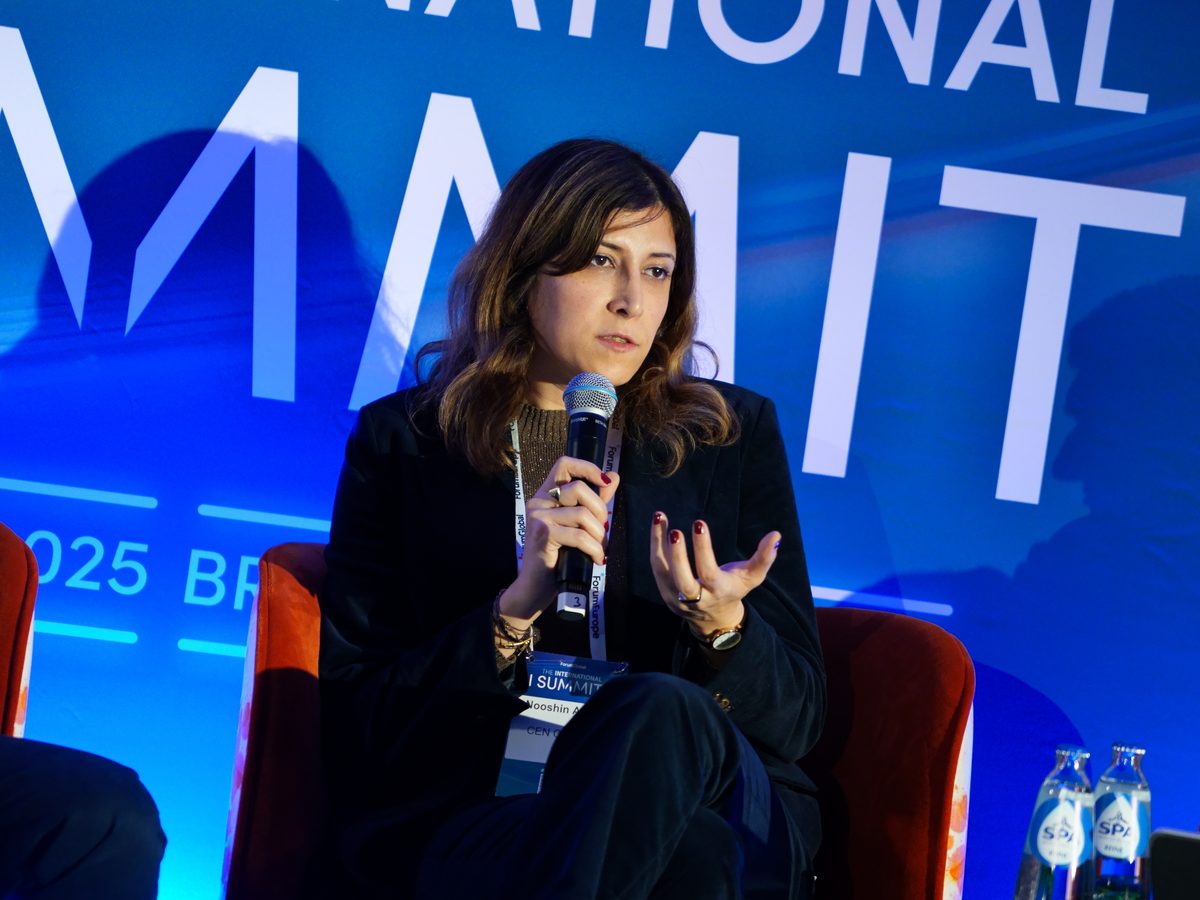
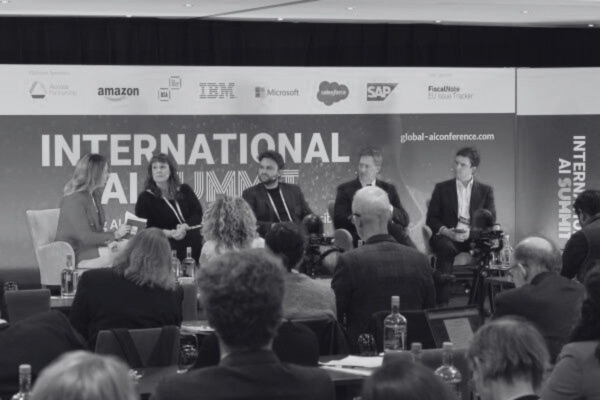
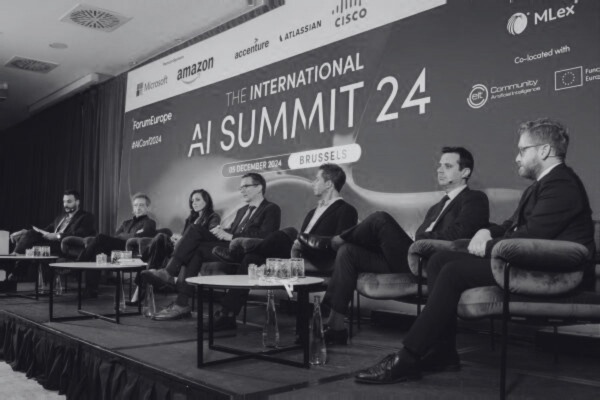
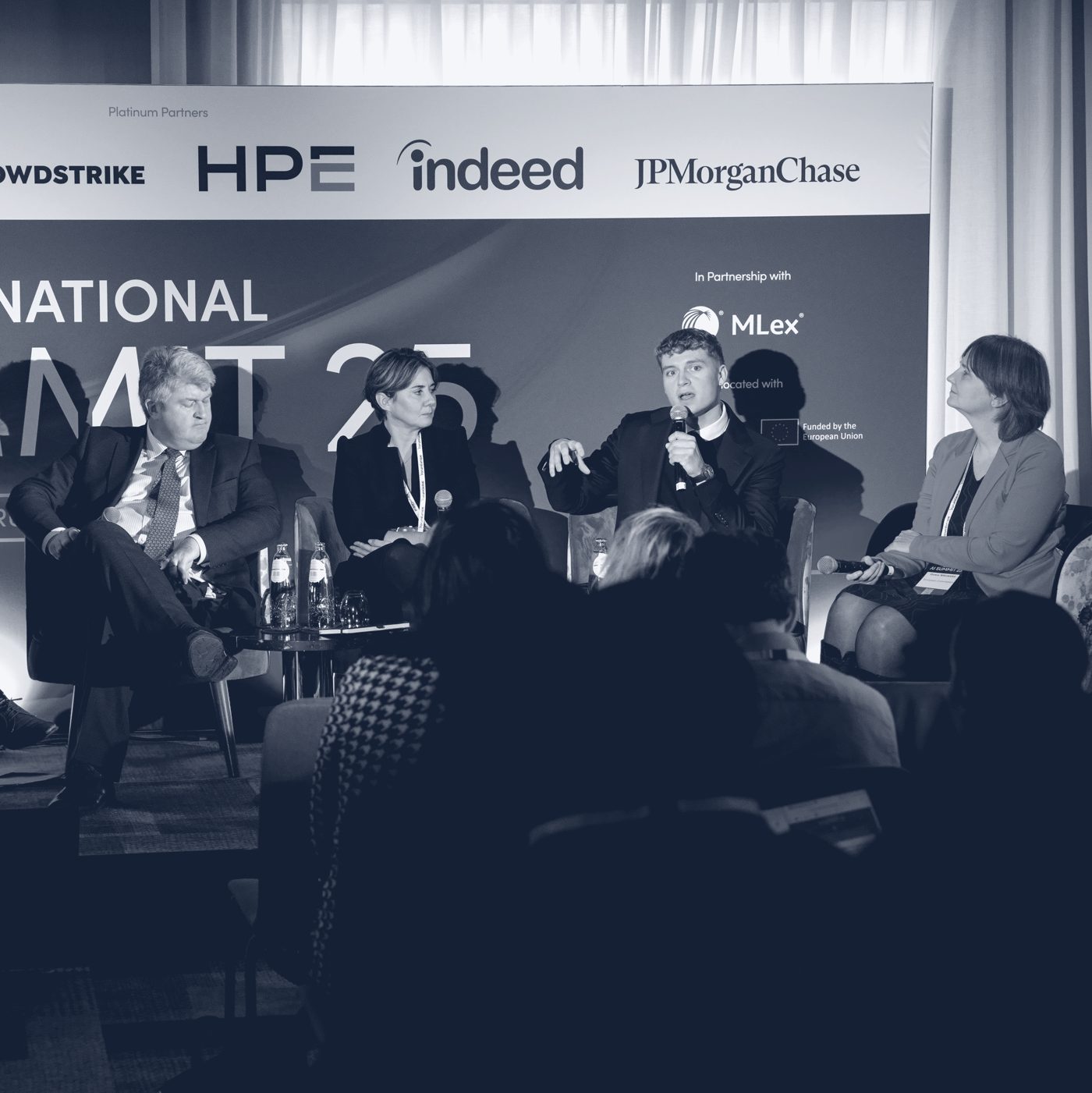


Forum Global, the international arm of Forum Europe, operates at the intersection of technology, innovation and connectivity, bringing together government and business to tackle some of the world’s most complex public policy challenges. Its clients and partners include national governments, international institutions, industry, media, think tanks and NGOs, and its gatherings take place in the UK, Europe and around the globe.
Since 1989, Forum Europe and Forum Global have organised events in partnership with major players in business and government, from the European Commission and national governments to industry associations and the world’s largest multinational corporations.